
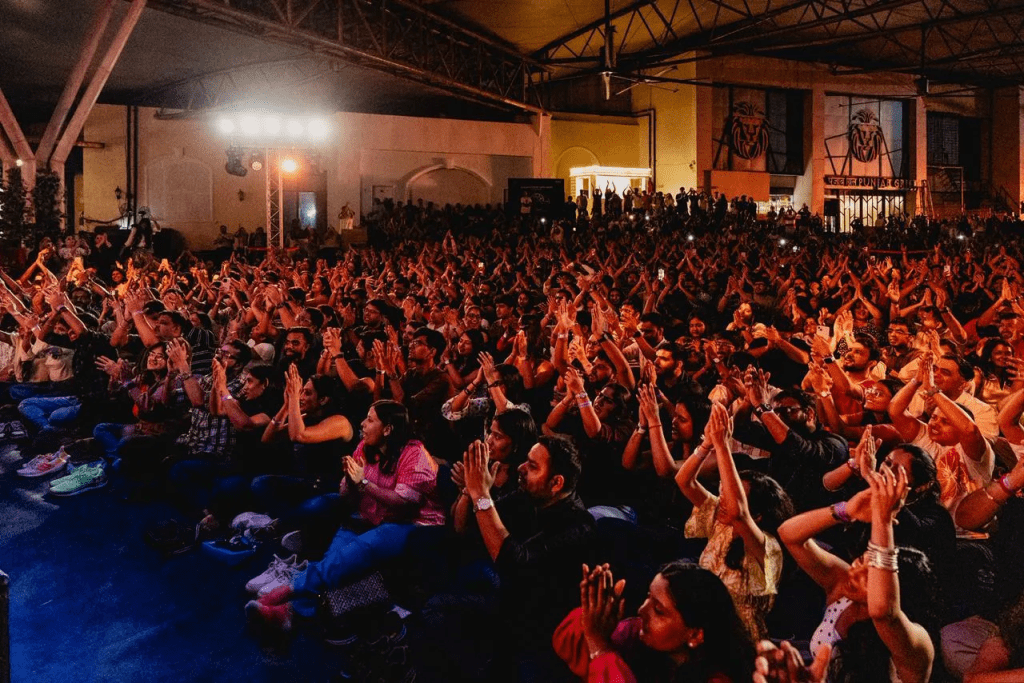
I keep seeing videos of bhajan clubs on Instagram – dim lights, incense in the air, hundreds of people singing “Raghupati Raghav Raja Ram” with their hands raised.
The reactions are familiar.
Some call it Impolite.
Others call it exactly what tradition needs.
To me, it feels natural.
I grew up in a culture where devotion was never fixed in one form. A culture that understood how to adapt without losing its core. And honestly, this isn’t new.
The beat may have changed. The instruments may look different. But the essence remains the same: taking god’s name together, singing in community, creating belonging through devotion.
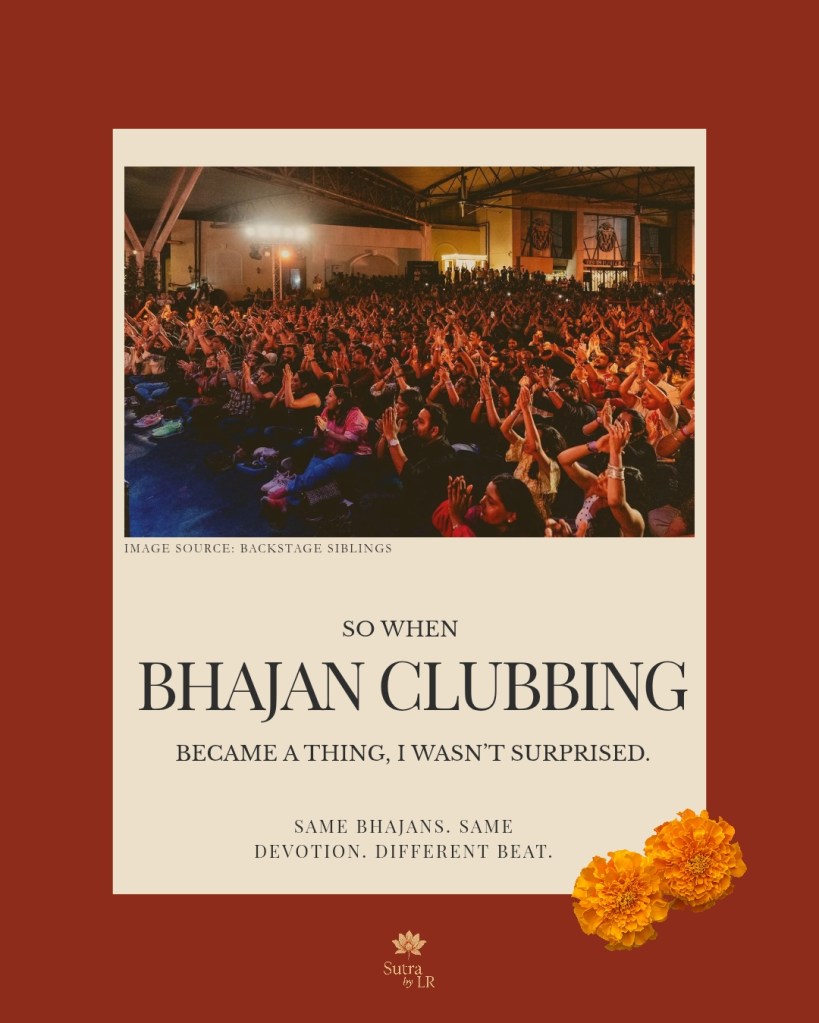
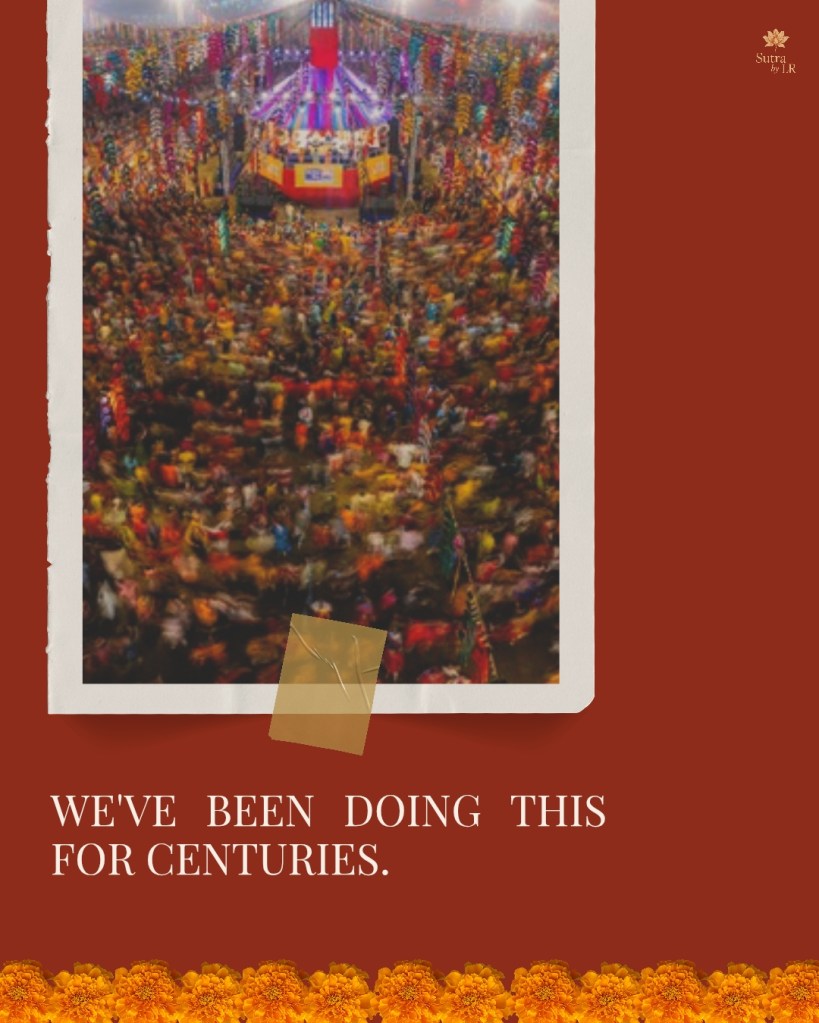
It’s Already Been Happening. Growing up Gujarati, none of this surprises me. Nine days of Navratri in Vadodara mean thousands of people gathering every night, dancing to garba songs. And garba songs, at their heart, are devotional – prayers to the goddess, set to rhythm, repetition, and movement
No one questions their sincerity.
No one asks why prayer looks like dance.
Because we’ve always understood something fundamental: devotion has never been only quiet.
The circle. The music. The collective energy of bodies moving together. That is tradition.
Bhajan clubbing feels like the same spirit – just in a different decade. And perhaps it’s only unfamiliar to those who haven’t grown up inside these rhythms.
This Was Never Rigidity
I’ve sometimes seen Indian spirituality described as rigid or overly formal. That idea has never made sense to me.
I never experienced my culture or religion as restrictive. If anything, it was expansive.
It made room for movement, sound, and community. Devotion wasn’t something you observed from a distance – it was something you participated in.
The notion that the sacred must be restrained or solemn feels like a misunderstanding, shaped by lenses that don’t quite know how to read our ways of worship.
Because for us, devotion was always something you moved with.
The dandiya in your hand.
The aarti on your lips.
The exhaustion in your legs and the lightness in your chest.
That wasn’t irreverence.
That was faith.
The flowers stacked in a Bathukamma.
Bhajans rising in a satsang.
Kirtans that once stayed within temple walls and now spill into streets and courtyards.
Ganesh arriving not quietly, but in procession – drums, chants, bodies moving together.
That wasn’t a spectacle.
That was remembrance.
I’m not worried about whether bhajan clubs are “authentic enough.”
I’m grateful.
Grateful that our traditions are flexible enough to meet people where they are. That we don’t have to choose between being modern and being rooted. That we can evolve without erasing.
Because tradition doesn’t die when it changes form.
It dies when it stops resonating.

 Sutra by LR
Leave a comment